
Leadership Lessons from the Hive: When the Chemistry Changes, the Colony Changes
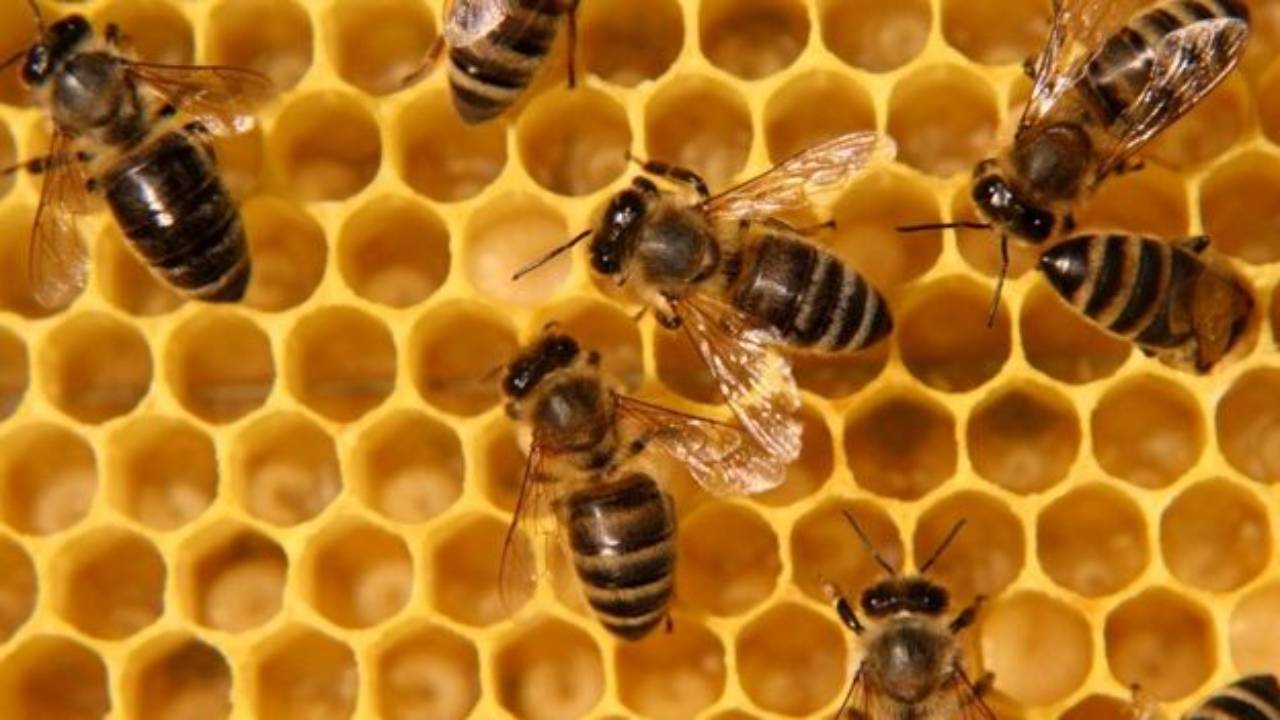
Sep 29, 2026Recently, in a leadership training, one of the leaders used his experience with bee hives in an ice breaker. For the remainder of the leadership training, we kept coming back to what we can learn from bee hives. That began a deeper dive in seeing the parallels to leadership and culture. There is something happening inside a beehive that every leader should understand.
And it has very little to do with honey.
A hive is a living, responsive social system. Thousands of individual bees operate with remarkable coordination without an organizational chart, weekly staff meeting, strategic plan, or employee engagement survey.
They communicate. They distribute work. They sense threats. They respond to environmental changes. They care for the next generation. They regulate temperature. They gather resources. And when something threatens the future of the colony, the system responds.
The Queen Doesn't Actually "Run" the Hive
First, let's clear up a common misconception. The queen bee isn't the CEO of the hive. She isn't flying around giving orders to worker bees. She isn't assigning someone to pollen collection and someone else to childcare. Her primary biological role is reproduction. But her influence extends far beyond laying eggs because she is also an important source of chemical signals that move throughout the colony.
Honey bees communicate extensively through pheromones. The queen produces a complex mixture of these chemical signals. Workers surround the queen and face her, touch her, feed and groom her, and in doing so help distribute her chemical signals throughout the colony. Those signals communicate information about her presence and reproductive status and influence the colony's social organization.
In other words: The queen's influence travels through the system. That should sound familiar to anyone who has ever worked for a powerful leader. Leadership is not only what you say in the meeting.
Your signals travel.
Your anxiety travels.
Your confidence travels.
Your defensiveness travels.
Your curiosity travels.
Your need for control travels.
Your willingness to trust travels.
Your respect for people travels.
Your reactions to bad news travel especially fast.
Eventually, people who weren't even in the room know how the leader responded.
That is chemistry.
The Hive Is Constantly Reading Its Environment
Here is where the biology gets even more fascinating.
Worker bees aren't blindly loyal to a queen simply because she holds the position of queen. The colony is continuously responding to signals. When conditions change, the bees change their behavior.
If a queen dies or disappears, for example, the colony can enter an emergency state and begin raising replacement queens almost immediately. If an existing queen's performance or chemical signaling declines, workers may prepare to supersede her. And during swarming, the colony raises new queens as part of reproducing the entire colony.
Three different situations.
Three different reasons.
But in every case, the colony is responding to changing conditions. Because sometimes something very similar happens inside organizations.
This is where I think the hive becomes a particularly useful metaphor for executive teams.
Leaders are often surprised by organizational shifts that were visible to everyone else long before they became visible to the leader.
An executive suddenly leaves.
A high performer takes half the team with her.
A board begins questioning the CEO.
Employees stop bringing ideas to one leader and start taking them to another.
An informal leader becomes more influential than the person with formal authority.
A group quietly begins imagining the organization without its current leader.
By the time the organizational chart changes, the relational chart may have changed months earlier.
That doesn't necessarily mean the people involved are malicious or disloyal.
It may mean they are responding to the system that seemed unstable or shifting.
That distinction matters.
What conditions caused people to begin organizing differently?
This Is Where Chemistry Matters
My research into chemistry in executive coaching led me to understand chemistry not as magic, personality matching, or simply "liking" someone. Chemistry is a co-created, generative, interactional system.It emerges between people. And there are conditions that make that chemistry possible. Legitimacy. Dignity. Containment. Agency. Attunement. Orientation. Now put those into the hive.
Is the leader still experienced as legitimate?
Do people feel valued and dignified?
Does the environment feel contained enough for people to take interpersonal risks?
Do people have agency, or does leadership control every decision?
Is the leader attuned to what is actually happening in the organization?
And do people still understand where they are going together?
When those conditions deteriorate, people adapt.
They stop speaking. They work around the leader. They create unofficial channels. They form coalitions. They protect themselves. They shift their allegiance. They look for other sources of stability.
You Can Change the Queen and Change the Hive
There is another piece of beekeeping that fascinates me.
Beekeepers sometimes requeen colonies where there is particular fussiness or agitation in the hive. That is where the leadership lesson gets really interesting. Because when we look closely at what is happening biologically inside a hive, we find something that looks surprisingly familiar to those of us who study organizations: Chemistry changes before the structure does.
One reason can be temperament.
A colony that is excessively defensive may become more manageable after introducing a queen from gentler genetic stock. But the change isn't instantaneous or magical.
The existing workers don't suddenly receive a memo announcing the new culture.
The transition occurs as the new queen establishes herself and, importantly, as her offspring gradually replace older workers. Honey-bee behavior has a genetic component, including aspects of defensive behavior, so changing the queen can eventually change the composition and temperament of the colony.
Read that again from a leadership perspective.
Change the source, and over time you can change the system.
Organizations often do the opposite. They keep the same source of dysfunctional signals and try to fix everyone downstream. Send the team to communication training. Teach employees resilience. Hire a consultant. Run a trust workshop. Create new values. Launch another engagement survey.
Tell people to collaborate.
Tell people to assume positive intent.
Tell people to have a growth mindset.
But what if the behavior we are trying to correct is an adaptive response to the signals coming from leadership?
You cannot ask the hive to become calmer while repeatedly introducing threat into the system. You cannot preach agency while punishing independent decisions.
You cannot ask for vulnerability while humiliating people who admit mistakes.
You cannot demand collaboration while rewarding territorial behavior.
You cannot put "People First" on the wall while treating people as expendable.
Eventually, the system learns which signals are real.
Chemistry is built from the signals people experience, not the values leaders announce.
Leaders Regulate More Than They Realize
The queen-bee metaphor becomes even more interesting when we stop thinking about leadership simply as authority. Leadership is also regulation. Think about what happens when a senior leader walks into a meeting.
Bodies change.
People sit differently.
Someone stops talking.
Someone becomes more animated.
Someone starts performing.
Someone becomes careful.
Someone who had a strong opinion five minutes earlier suddenly says, "I'm fine either way."
The leader hasn't issued an instruction. Yet the system has already changed.
That is chemistry.
Humans aren't bees, and leadership isn't pheromonal control. But human groups are also constantly exchanging signals about safety, status, belonging, power, acceptance and threat.
A raised eyebrow can be a signal. Silence can be a signal. Interrupting someone is a signal. Asking another question instead of defending yourself is a signal. Giving credit is a signal. Who gets invited into the room is a signal. Who gets interrupted is a signal. Who is allowed to challenge the leader is a signal. Who gets forgiven for a mistake is a signal.
And just like the hive, people respond to the environment those signals create.
Chemistry Killers Are Signals Too
In my research, I identified behaviors and conditions that can kill chemistry.
Power.
Control.
Avoidance.
Imagine those operating repeatedly from someone with significant authority. Eventually, people stop orienting toward the leader. They orient around the leader. That is an important distinction. When chemistry is strong, people move with leadership. When chemistry collapses, people learn to move around leadership. That's when informal systems become stronger than formal ones.
Before You Blame the Bees, Examine the Chemistry
This is the question I would ask leaders. When you don't like the behavior you're seeing in your organization, where do you look first?
At the bees?
Or at the hive?
We are quick to diagnose employees.
They're resistant.
They're negative.
They're territorial.
They're disengaged.
They're afraid of change.
They're not strategic.
They don't communicate.
They need more accountability.
Maybe.
But before we diagnose the bees, we should examine the chemistry.
What signals have they been receiving?
What behavior has been rewarded?
What happens when someone disagrees?
Where is power concentrated?
Where has dignity been compromised?
Where has agency disappeared?
What conversations are people no longer willing to have?
Where are people organizing informally because the formal system no longer works?
That is why leadership chemistry matters.
You can change structures.
You can rewrite job descriptions.
You can reorganize departments.
You can announce new values.
You can move boxes around an organizational chart.
But the hive is paying attention to something deeper. It is paying attention to the signals. And when the signals change, behavior changes.
When behavior changes, relationships change.
When relationships change, chemistry changes.
And eventually, the entire hive can change.
So perhaps the leadership question isn't simply:
How do I get my people to change?
It might be:
What is my presence teaching this system to become?