
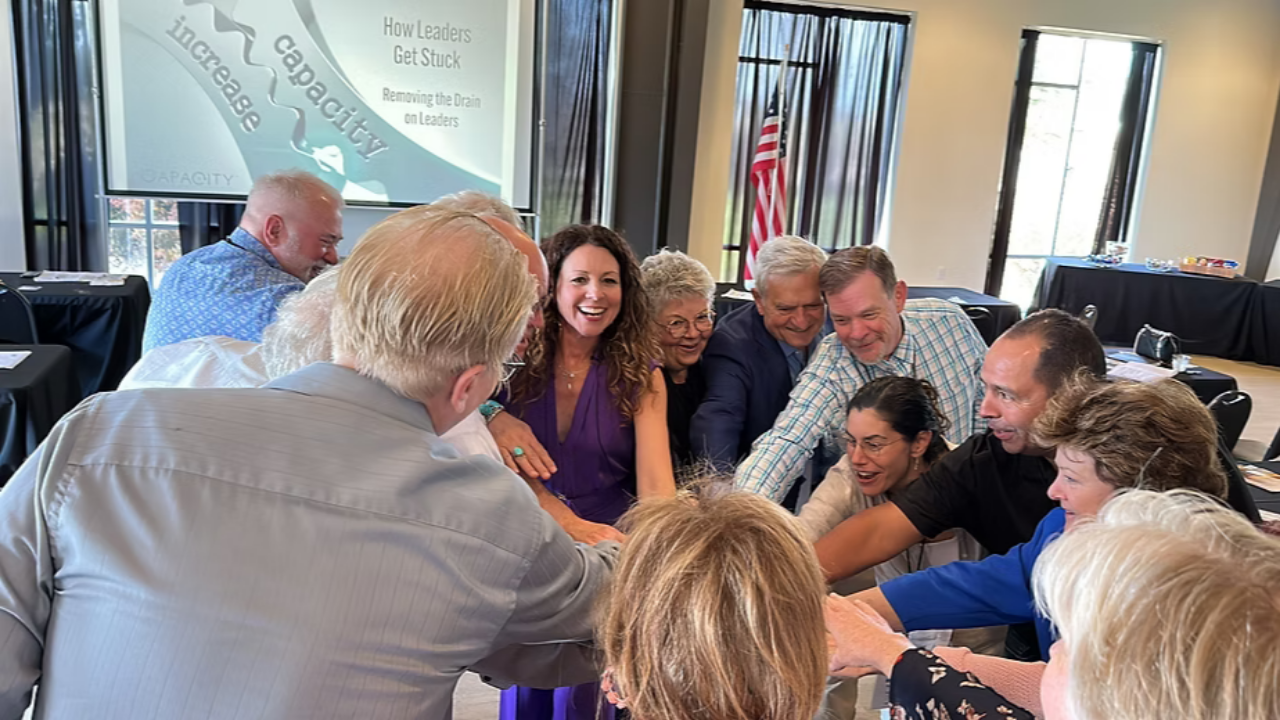
Entrainment, Part Two: The Emotional Energy of Leadership
Sep 09, 2026In Part One, we explored entrainment through the lens of Integral leadership and how leaders can create harmony in organizations by aligning values, vision, and presence.
But entrainment is not only about shared purpose—it’s also about emotional energy.
Kelly and Barsade (2001) describe entrainment as people adjusting their behavior—often without conscious awareness—to coordinate or synchronize with another person. This is, perhaps, the closest definition to what we call chemistry in leadership and coaching. It’s that effortless flow when two people are “in tune,” responding to one another almost instinctively.
Goss (2007) takes this further through Ritual Chain Theory, which suggests that people are either attracted or repelled by the emotional energy of others. This emotional energy sets the tone—and the level—of entrainment that takes place. High emotional energy can draw people in, creating momentum and cohesion. Low or negative energy can fragment a group and stall progress.
Disposition Matters—But Emotions Move People
The research also highlights dispositional effects: our predisposition toward the world—optimistic or pessimistic—strongly influences our behavior in groups. However, emotions often have more power than disposition or mood when it comes to shifting beliefs. In other words, even a naturally positive or negative person can be influenced by the emotional energy in the room.
For leaders, this is critical. The emotional “signal” you send out—whether intentional or not—can either elevate your team’s rhythm or throw it out of sync. And because entrainment happens at a subconscious level, your presence is shaping the room long before you speak.
Coaching
In a one-on-one coaching relationship, entrainment can create synchronicity and mutual respect. This deep resonance supports effective coaching:
- Goal Setting & Achievement – SLT builds self-motivation and maximizes potential for both the individual and the organization.
- Feedback – In entrainment, feedback happens through resonance and dialogue, making it more impactful and less defensive.
- Reflection & Learning – SLT aligns with inner life practices, using mindfulness and spiritual values to deepen insight.
- Continuous Improvement & Transformation – Organizational mission and entrainment keep growth sustainable and connected to purpose.
Chemistry as an Emotional, Spiritual, and Consciousness Phenomenon
When you view chemistry through this lens, it’s not just about compatibility or shared interests—it’s the result of emotional energy, spiritual connection, and conscious presence aligning in real time. Entrainment is what bridges the leader’s inner life with the collective heartbeat of the group.
As leaders, when we tune ourselves emotionally and spiritually, we set the conditions for others to resonate with us. That resonance isn’t just felt—it’s acted upon. And when it happens, it can transform not just a meeting or a moment, but the culture of an entire organization.